
Articles
LATEST RESEARCH AND ARTICLES
FEATURED
MOST READ



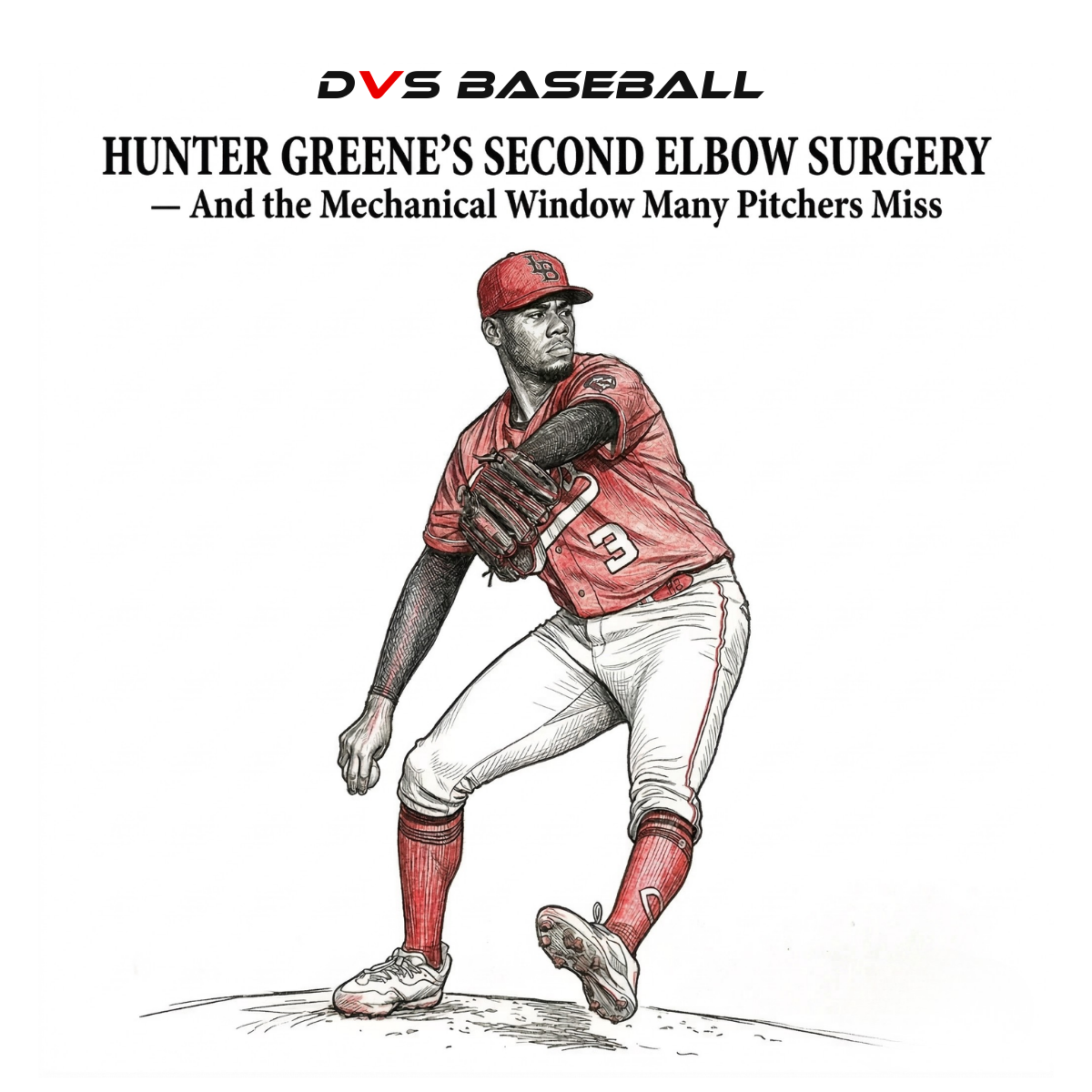
Hunter Greene’s Second Elbow Surgery — And the Mechanical Window Many Pitchers Miss
Cincinnati Reds ace Hunter Greene is set to undergo his second elbow surgery since entering professional baseball. After analyzing more than 4,000 MLB pitchers, this pattern has become increasingly familiar. In today’s game, elite velocity alone is not enough to sustain a career. There is a subtle mechanical window in the pitching delivery—often missed—that determines whether a pitcher’s body can support high velocity over time. Hunter Greene’s situation highlights a sequencing issue many pitchers face, and why correcting it could be the difference between short bursts of dominance and a durable career.
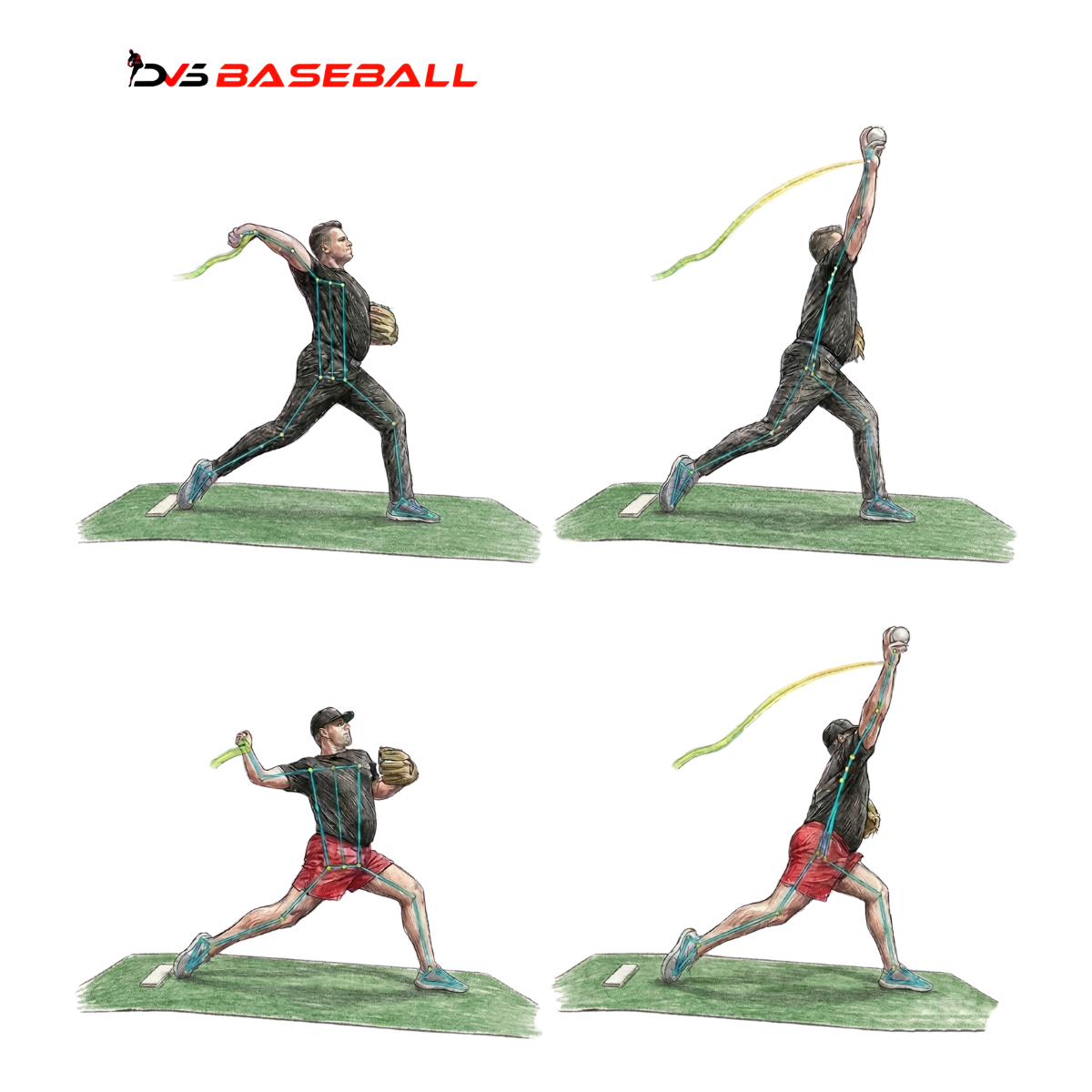
Using LiveArm and DVS X-Ray to Guide High-Intensity Throwing
Returning to high-intensity throwing requires more than just increasing effort. In this article, I share how I’m using LiveArm strength testing and DVS X-Ray biomechanical analysis to guide my throwing progression, monitor shoulder strength, and ensure my mechanics remain efficient as intensity increases.

Talent Opens Doors. Durability Keeps Them Open.
If you’re labeled a top pitching prospect, you already checked the first box, you have the “stuff.” The next question is the one that determines careers: can you sustain innings and results long enough to earn the second, third, and fourth contracts? After watching Rhett Lowder return this spring, and seeing Chase Burns show the same modern “finish” trend, I want to make one thing clear, talent gets you noticed, but durability is what keeps the door open.
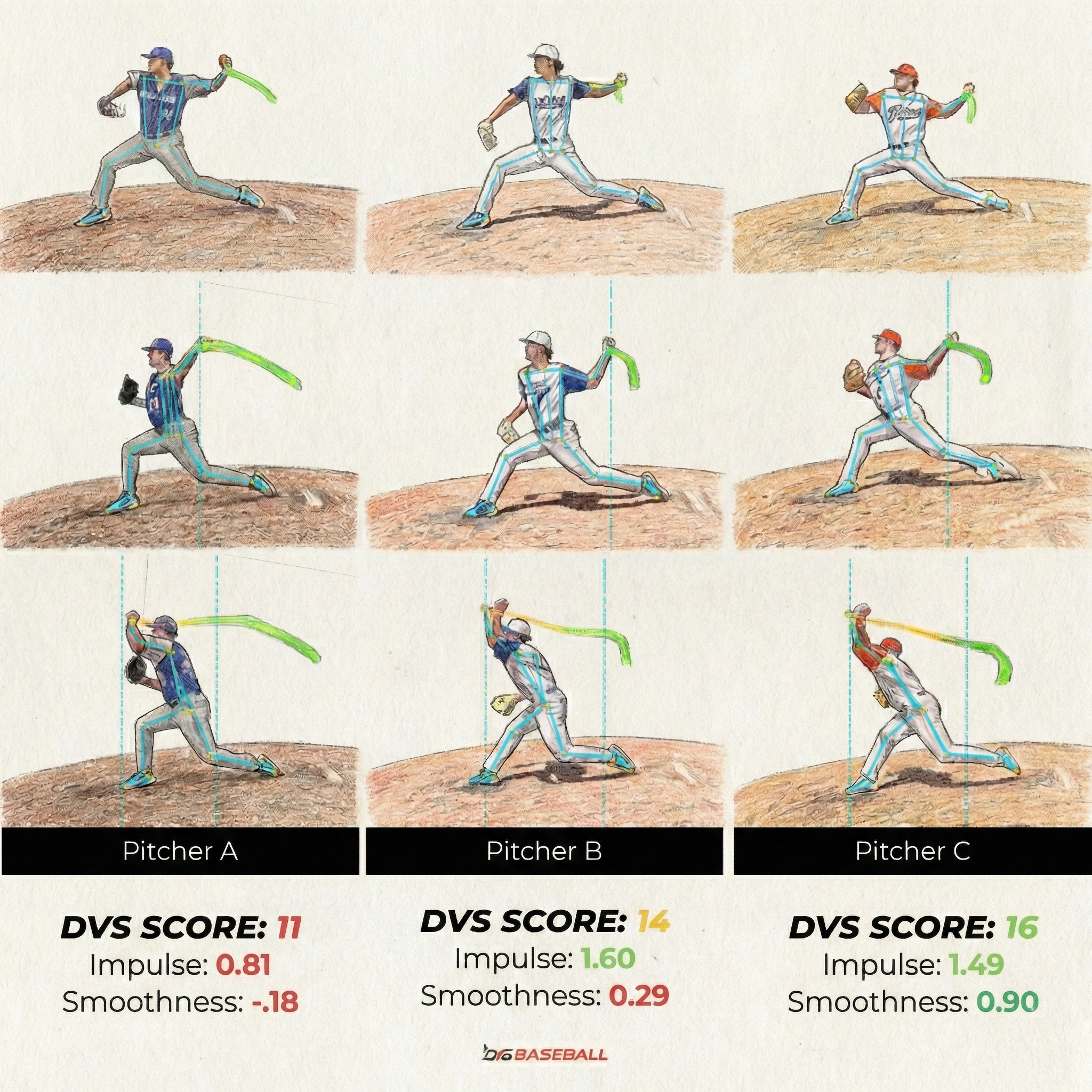
Using DVS X-Ray to Guide Conversations About Velocity Gains
If you’re responsible for developing pitchers, this is a practical guide to applying DVS X-Ray data in real time. I explain how DVS Score (energy creation) and Arm Impulse (energy transfer) work together, then walk through three pitcher profiles to show how to adjust training focus, ramp workload appropriately, and pursue velocity gains with better leverage and lower risk.
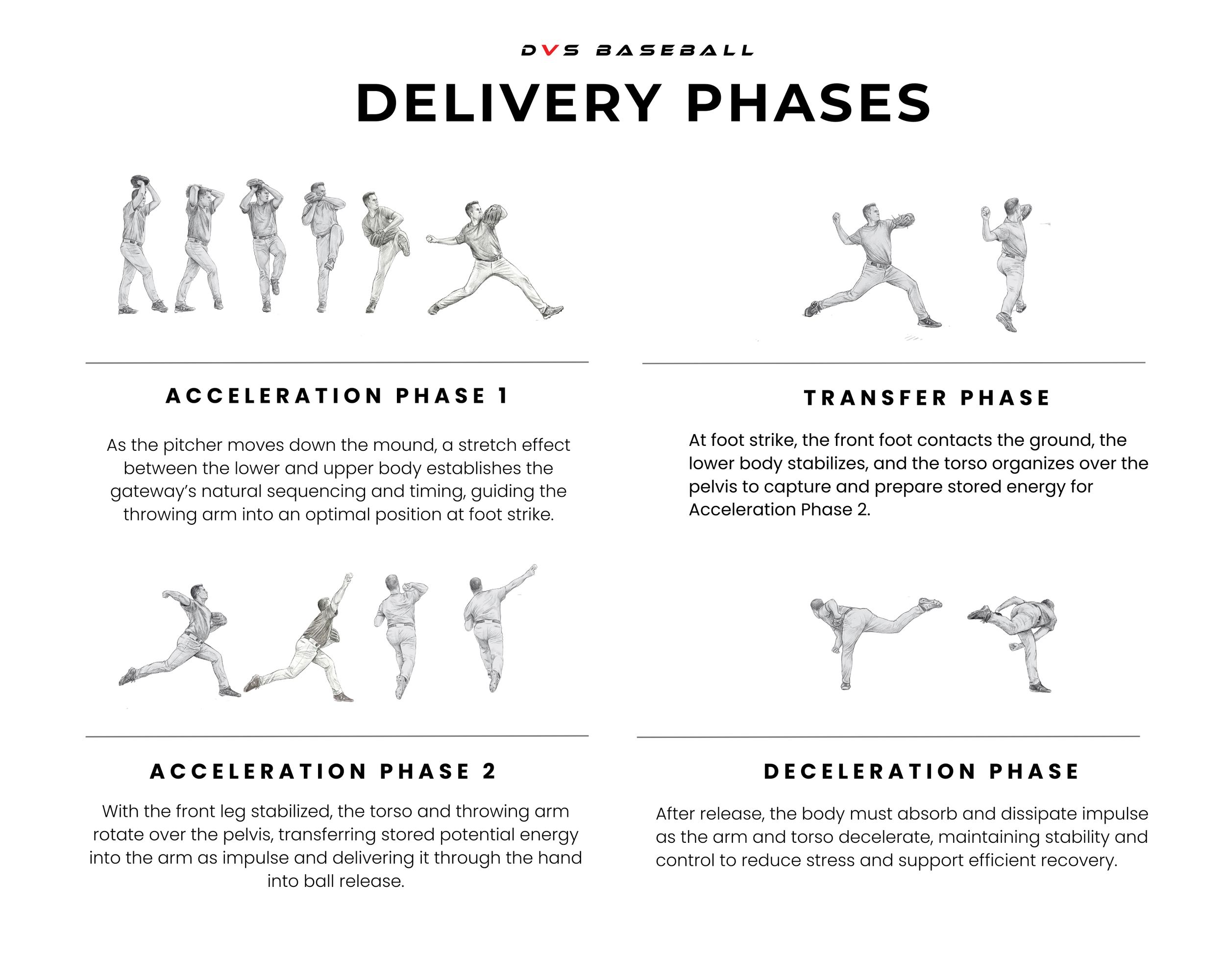
Improve Your DVS Score: The 4-Phase Blueprint for Healthy Velocity
A pitcher’s delivery isn’t just “mechanics”—it’s an energy system. The DVS Score shows how efficiently you’re using it, and the process in this article explains exactly how to improve it.
Velocity Is Easy to Measure. Sustainability Isn’t.
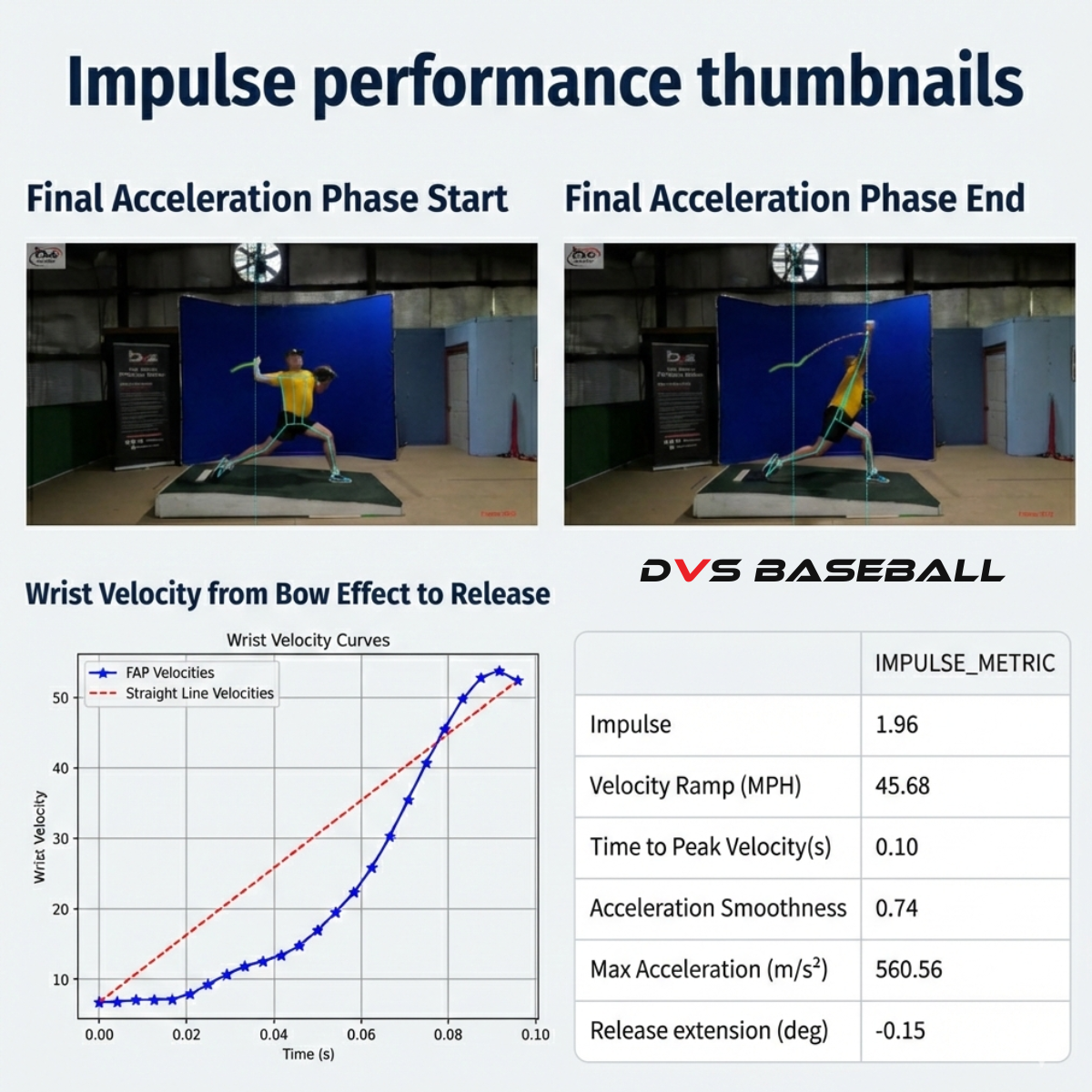
Velocity is trending up across baseball, but durability is trending the other way. The radar gun gives you the output—it doesn’t explain how the force was generated or whether it’s repeatable. By pairing the DVS Score with Arm Impulse metrics, pitchers and coaches can stop chasing peak numbers and start building sustainable velocity that holds up over a season and a career.
Be On-Time This Preseason: The Flat-Ground Key for Pitchers to Protect the Throwing Arm and Accelerate Smoothly
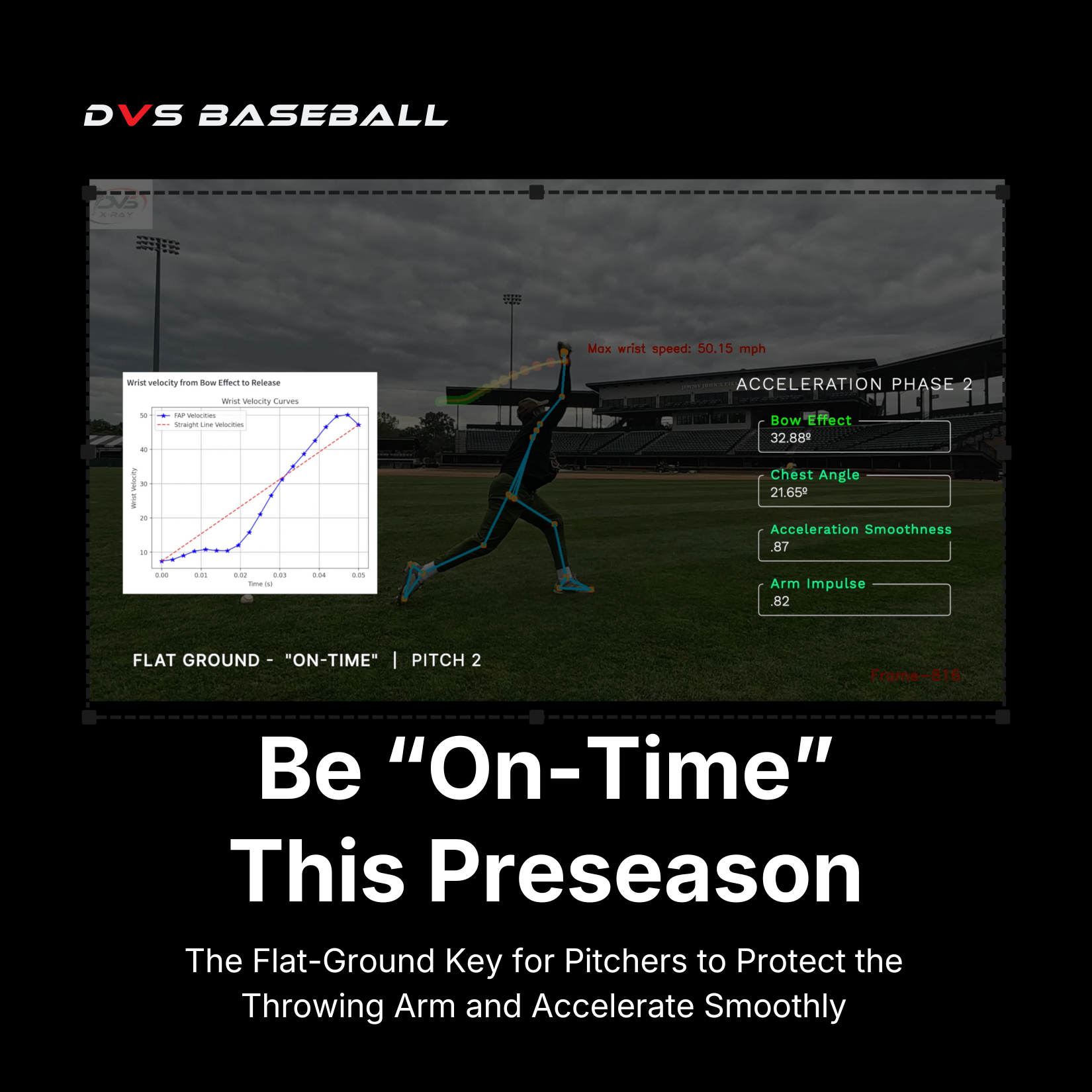
Preseason isn’t just about getting your arm in shape—it’s about getting your arm on time. When your forearm and spine are within 10° of parallel at foot strike, the arm can accelerate on a smoother, more efficient path (Acceleration Smoothness trending closer to 1.00). This article breaks down the flat-ground sequence that starts at the rear foot, improves Mass & Momentum, and helps pitchers protect the throwing arm while sustaining repeatable execution all season.

22 Frames of Acceleration: Why How the Arm Accelerates Matters More Than Velocity
Velocity isn’t the full story. A 22-frame acceleration path reveals how pitchers build speed, protect arms, and sustain long-term performance.

Better Extension, More Perceived Velocity: How Sequencing Unlocks a Hidden Edge
Discover how pitchers can increase perceived velocity through better sequencing and extension. Learn the biomechanics behind making 90 mph feel like 95—without throwing harder.

The Roller Coaster Effect: Unlocking Velocity Through Momentum and Sequencing
Throwing harder isn’t about forcing velocity—it’s about allowing energy to transfer efficiently. Learn how momentum, sequencing, and biomechanics work together to maximize velocity and durability in pitching by riding the roller coaster effect.

The Stretch Effect: A Sustainable Approach to Pitching Velocity
Sustainable velocity isn’t just about throwing harder—it’s about optimizing mechanics and energy transfer. The Stretch Effect maximizes separation between the pelvis and upper body, allowing pitchers to generate more velocity without excessive arm stress.
In this article, we break down how Nate Reed, a College of Charleston commit, applies this principle to refine his delivery.

The Best Amateur Pitching Delivery I’ve Ever Seen
Logan Jarosz had the most mechanically efficient amateur pitching delivery I’ve ever seen. This post explores his natural motion, the challenges he faced in player development, and the importance of mentorship over technology in coaching. Discover why individuality in pitching mechanics matters.

The Revival of the Traditional Windup: A Potential Game-Changer for Modern Pitchers
Rediscover the lost art of the traditional windup—a pitching technique that once dominated baseball's golden era. In this detailed exploration, we delve into how this classic method could revolutionize pitching in the modern era, enhancing both performance and longevity. Learn why some of baseball's greatest Hall of Fame pitchers swore by this method, and why it still holds tremendous potential for today's high-velocity pitchers.
Kolby Allard's DVS Score: A Future Perspective for MLB Pitching Mechanics
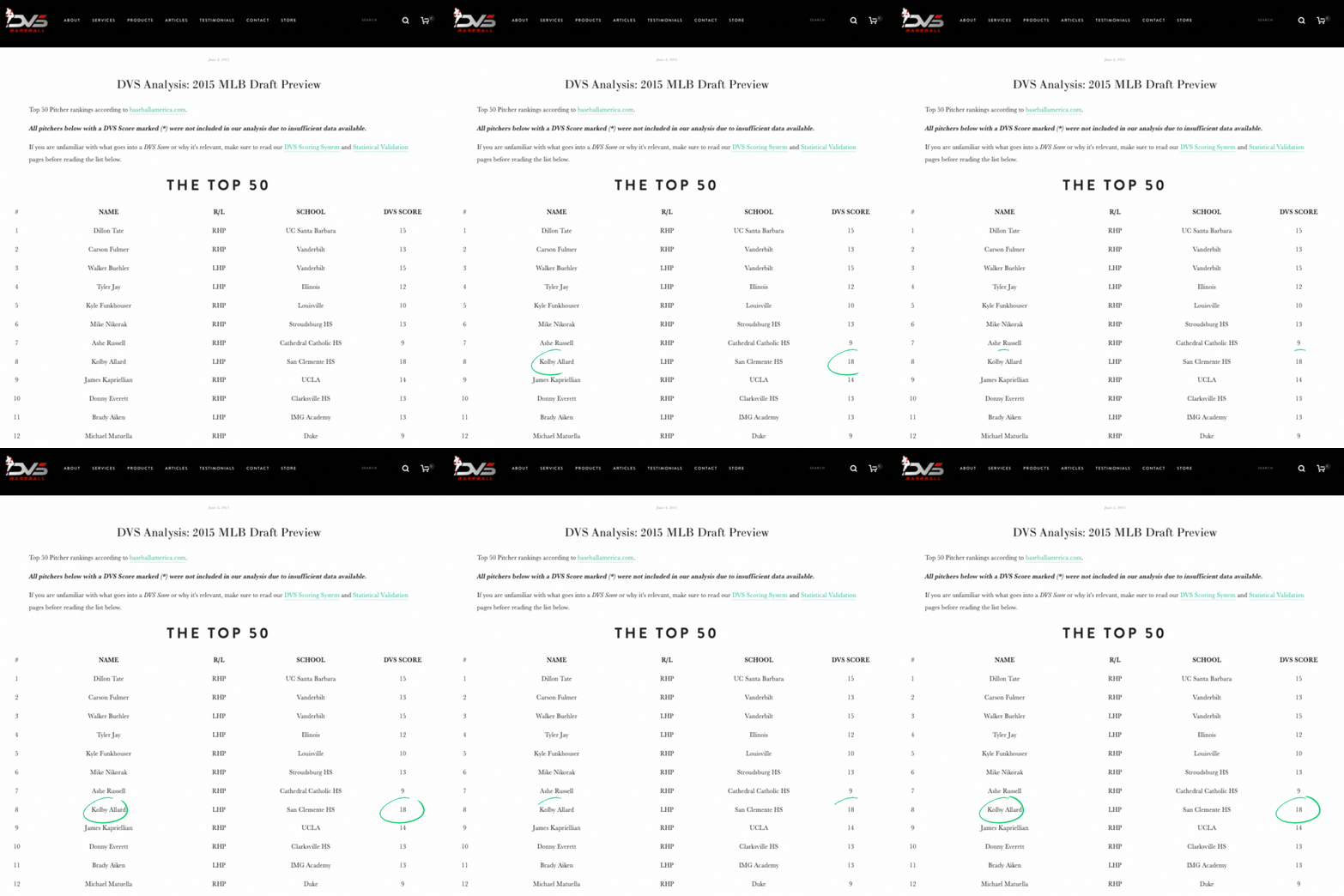
Kolby Allard’s early DVS Score as a high school pitcher provides key futuristic insights for MLB Organizations now almost a decade later.
Analyzing the Characteristics of Tommy John Surgeries: Insights from the DVS Baseball Injury Risk Model
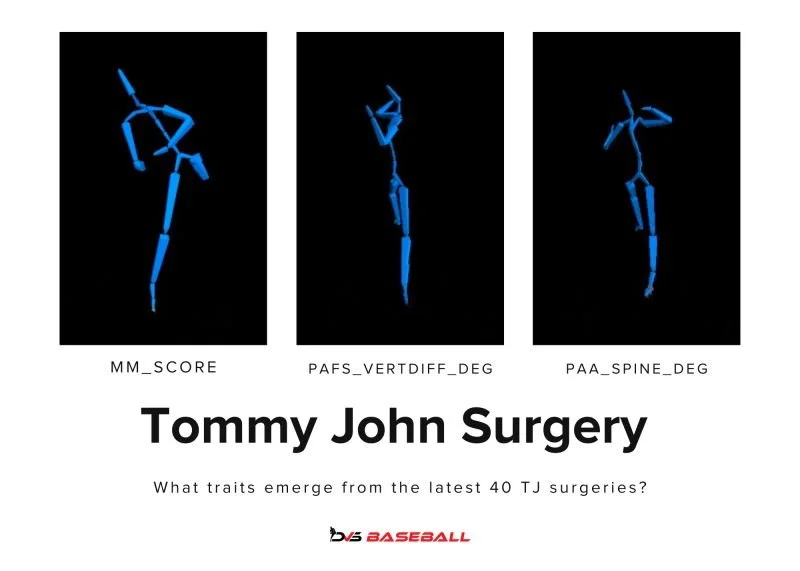
In our ongoing commitment to understanding and mitigating injury risks in baseball, we've delved into the characteristics of the last 40 Tommy John (TJ) Surgeries entered into the DVS Baseball Injury Risk Model. These surgeries, affecting pitchers 25 years or younger, have provided valuable insights into the factors influencing throwing arm injuries in the sport.

Pitching Mechanics Rankings: Starting Pitchers in the 2022 MLB Playoffs
47% of all starting pitchers in the 2022 MLB Playoffs fall into the high injury risk category. Which starting pitchers have the best and worst pitching mechanics?
Because something can be measured does not mean it should become the measure of everything. Baseball’s danger did not begin when it acquired better information. It began when information ceased to serve the game—and the game began to serve the information.