
Articles
LATEST RESEARCH AND ARTICLES
FEATURED
MOST READ



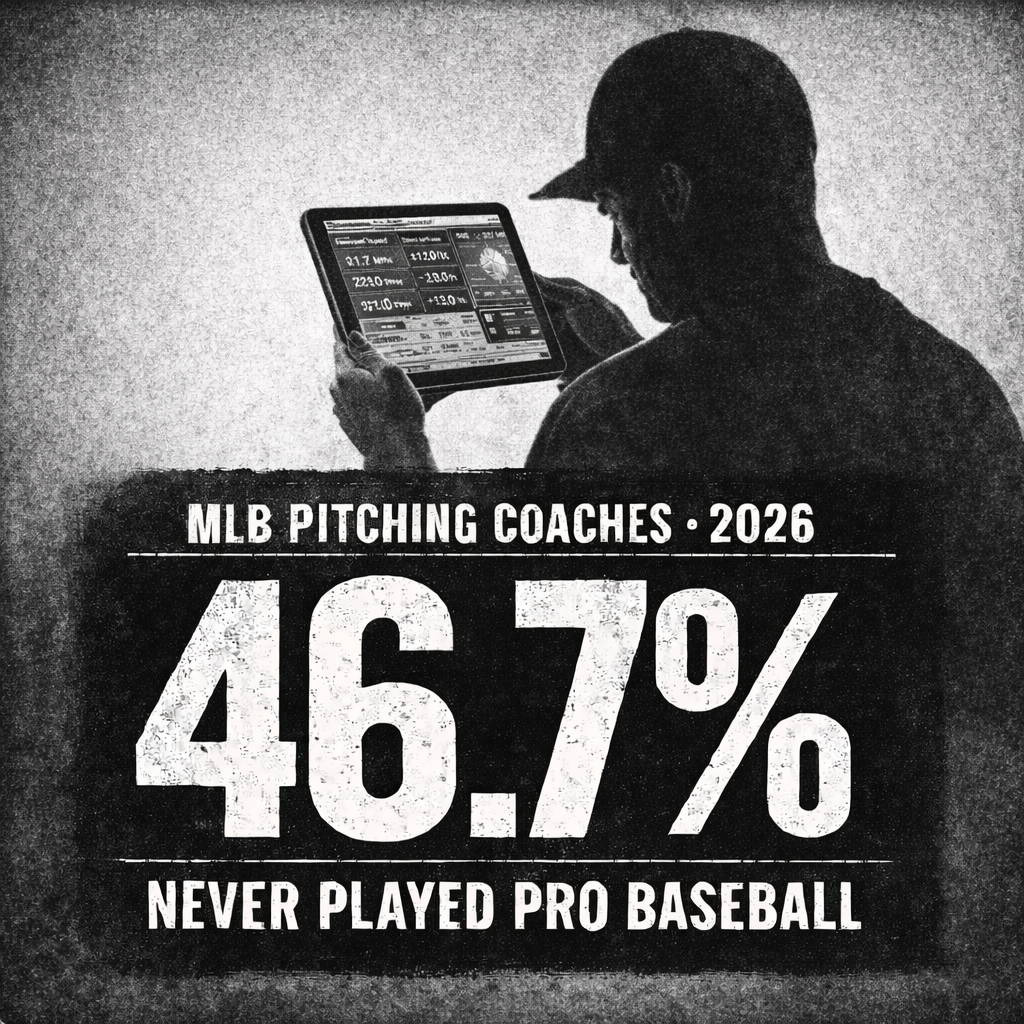
Nearly Half of MLB Pitching Coaches Never Played Pro Baseball—Here’s What the 2026 Data Shows
A role-by-role look at 2026 MLB pitching staffs shows how many coaches have zero pro playing experience—and what that shift could mean for pitcher durability.
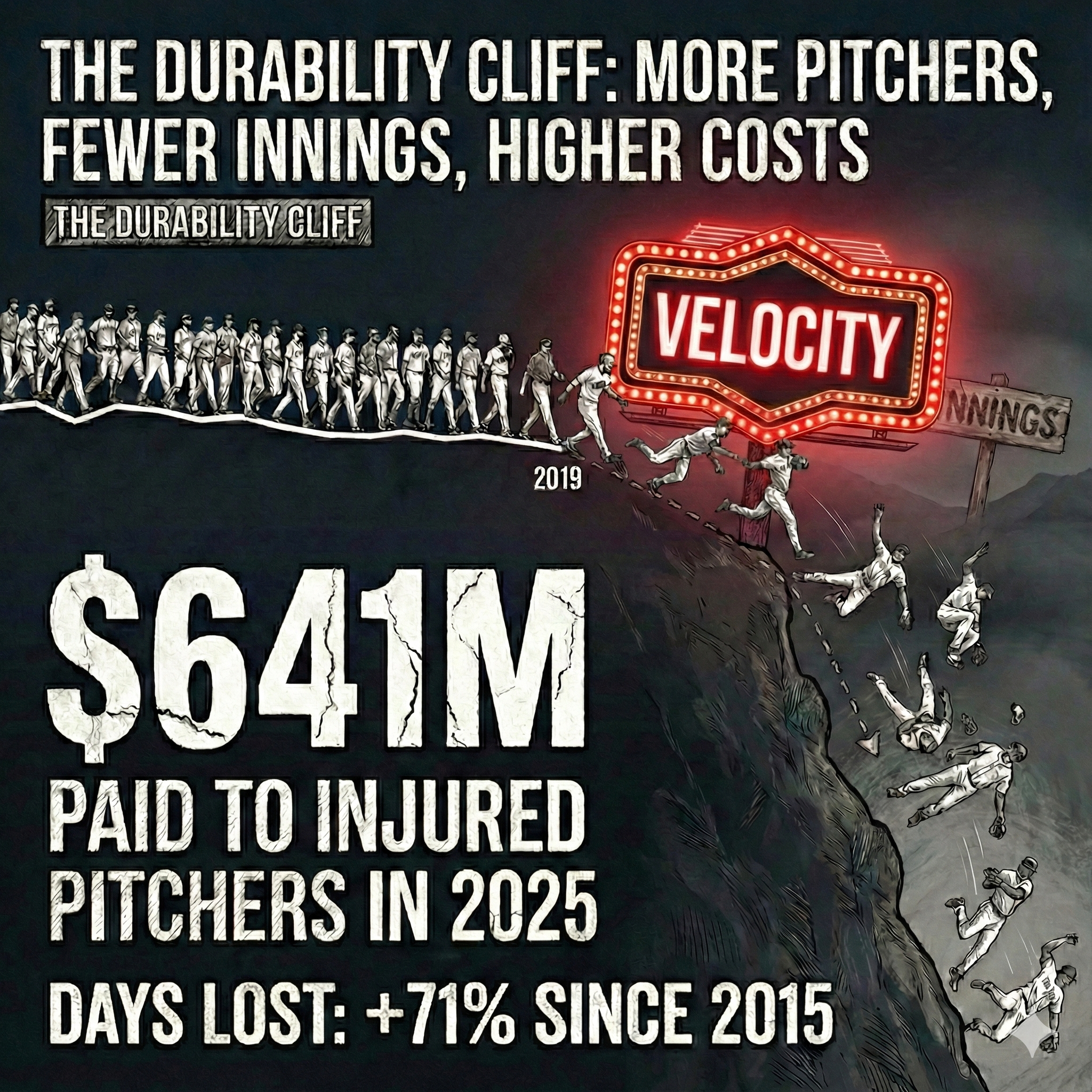
The Durability Cliff: Why MLB Needs 42.7% More Pitchers
MLB teams are using 42.7% more pitchers per season since 2013—not because it’s smarter, but because durability is collapsing. With Days Lost to the IL up 71% and hundreds of millions paid to unavailable arms, the sport now rewards “stuff” faster than it rewards consistency. This is the Durability Cliff—and why the next advantage will be rebuilding traditional starter durability.

The Extinction of the Workhorse: A Data-Driven Look at the Decline of Starting Pitching
After analyzing over 1,100 elite pitchers drafted since 2013, the data reveals a sobering reality: a 38% injury rate and an "inning threshold" that is ending careers before they reach their prime. DVS Baseball founder Justin Orenduff breaks down the case study that explains why the 200-inning workhorse is becoming extinct and how we can engineer a path back to durability.

Innings Lost: The Crisis Facing High School Pitchers Today
The increasing number of arm surgeries among high school pitchers highlights a concerning trend in baseball. With an average of just 126 professional innings before injury, young pitchers are breaking down faster than ever. This article explores the factors contributing to the decline of traditional starters and the culture that prioritizes velocity over durability.

MLB Pitching Injury Update: June 3rd, 2024
Explore the latest MLB pitching injury update for June 3rd, 2024. Discover the impact of injuries on teams, the staggering financial costs, and how DVS Baseball's solutions can help reduce risks and improve performance

Optimizing Foot Strike: Key Insights from the Latest DVS Baseball Injury Risk Data
Only 1.3% of pitchers achieve an optimal foot strike component score, significantly impacting injury risk. Discover how biomechanics and proper sequencing can enhance pitching performance, reduce injury risk, and increase efficiency with our Mechanics for Velocity and Performance program.

Case Study: The Decline of MLB Starting Pitchers
In this case study, Justin Orenduff examines the decline of the “traditional” starting pitcher in MLB using the Top 3 Pitchers drafted by each MLB team since 2012. In addition, the case study details which MLB Organization has done the best job of developing their top prospects into MLB Pitchers. The results paint a revealing trend about the direction of pitching development.

Ranking the Top 50 2021 MLB Draft Prospects by DVS Score
Injuries are on the rise among professional pitchers. According to Spotrac data, in the 2017 season, 88 pitchers landed on the 60-day DL. In 2018, that number was 101 pitchers. In 2019, it rose to 118. As contracts cost teams more and more, organizations want to get the most production they can out of healthy players. Analyzing the 2021 Top 50 draft eligible pitchers, there is important data to consider regarding longevity in the 2021 MLB Draft.

Ranking the 2021 College World Series Pitchers by DVS Score
The ranking of pitchers in the 2021 College World Series by DVS Score (pitching mechanics) revealed 44% of pitchers are at high risk of a throwing injury while 16% of pitchers are at low risk. The results are similar to our MLB injury statistics and further illustrate that most pitchers from amateur baseball to professional baseball are at high risk and don't even know it.

The Cost of Pitching Injuries
Pitching injuries continue to be a major driver in uncertainty, loss of performance, and dollars lost for Major League Baseball (MLB) organizations. According to data from Spotrac, 18,369 days were missed by pitchers on the disabled list with a throwing-related injury in 2019, the last full season of Major League Baseball. That is equivalent to about 102 full pitcher seasons or just under one-third of all opening day pitchers missing the entire season. This translates into $318,667,058 total dollars lost for MLB clubs by paying pitchers unable to perform on the field.
Baseball Continues to Inherit Injury Plagued Pitchers
In July of 2015, a study was released in the American Journal of Sports Medicine that revealed that nearly 60% of Tommy John surgeries in occur in teenage males between the ages of 15 and 19. Now, four years later, have the statistics surrounding throwing injuries from youth pitchers to the Major League pitchers improved? From our statistics and observations, the answer is NO.
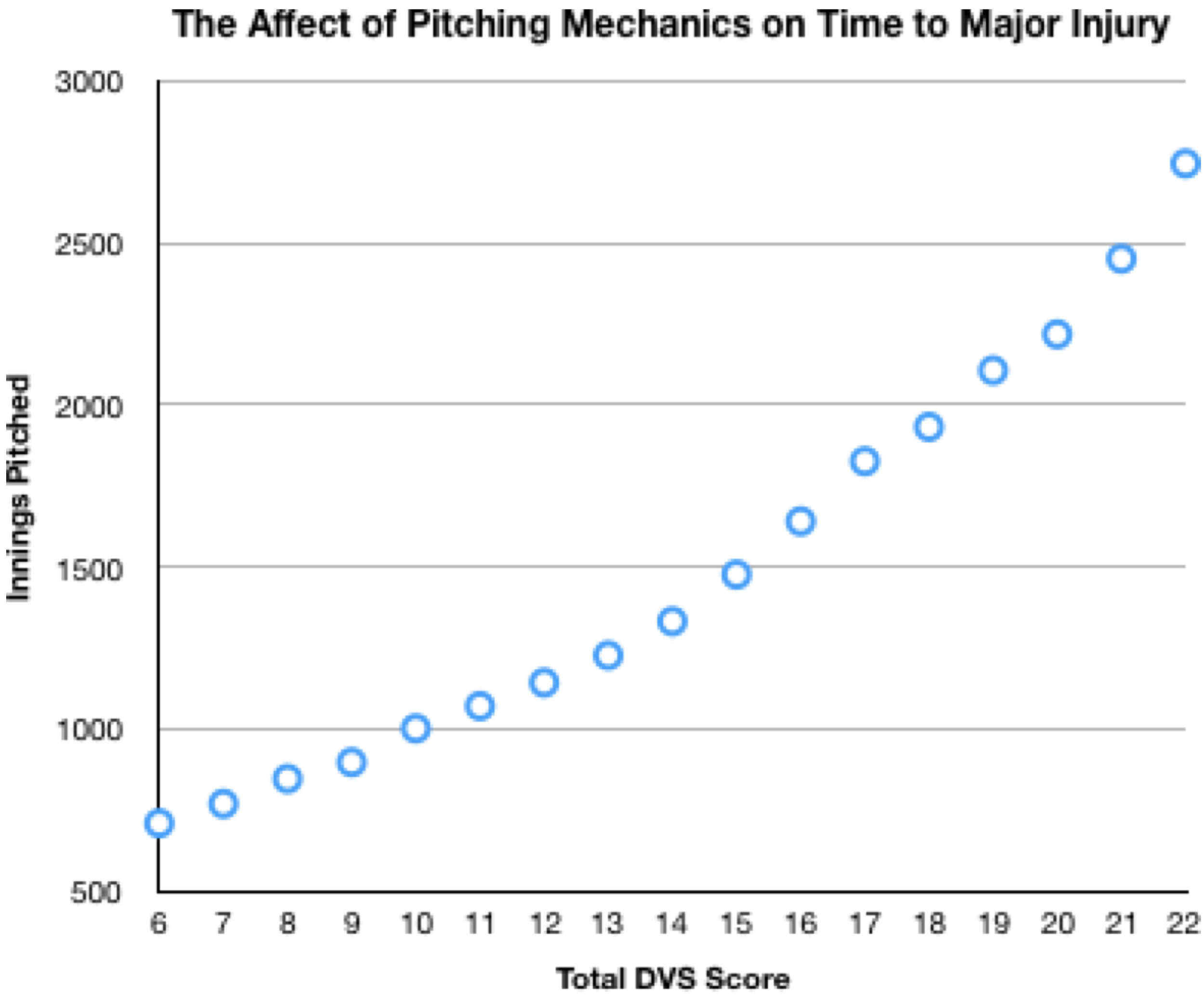
DVS Model Continues to Show that Pitching Mechanics is Statistically Related to the Risk of Major Throwing-Related Injury
DVS Baseball completed a major data re-collection and database expansion in the Fall of 2018. This expansion increased the number of professional and college pitchers in our database to over 1200, including every MLB pitcher on an opening day 2018 roster. With the recent database expansion, the DVS Model continues to prove a pitcher’s mechanics significantly influence their time to a major injury.
Because something can be measured does not mean it should become the measure of everything. Baseball’s danger did not begin when it acquired better information. It began when information ceased to serve the game—and the game began to serve the information.