Hunter Greene’s Second Elbow Surgery — And the Mechanical Window Many Pitchers Miss
A subtle timing issue in the pitching delivery can determine whether elite velocity leads to a durable career—or repeated arm injuries.
Cincinnati Reds ace Hunter Greene is set to undergo elbow surgery and will be out until at least July.
This will be Greene’s second elbow surgery since the start of his professional career. He underwent Tommy John surgery in April of 2017 after throwing just 72 professional innings. Now, roughly 602 innings later, Greene will undergo another procedure on his throwing arm to remove bone chips.
I’ve been rooting for Hunter Greene to become a reliable ace for the Reds year after year. He’s coming off his best professional season—earning All-Star honors and throwing a career-high 150 innings.
But even during that season, he missed time with elbow soreness.
Unfortunately, the news of another elbow procedure doesn’t come as a surprise.
High-velocity pitchers in today’s game face a simple reality: they must either learn how to throttle intensity up and down, or make foundational adjustments to their delivery that allow the body to support that level of velocity.
Over a year ago, I wrote about and posted a video showing the adjustment Greene would likely need to make to prolong his career and avoid another surgery sooner rather than later.
Ironically, the movement he could benefit from is something his teammate Elly De La Cruz demonstrates naturally.
The Mechanical Window
The adjustment centers around the timing of the thoracic spine transitioning from flexion to extension during the delivery. At DVS, we refer to this timing as the Gateway.
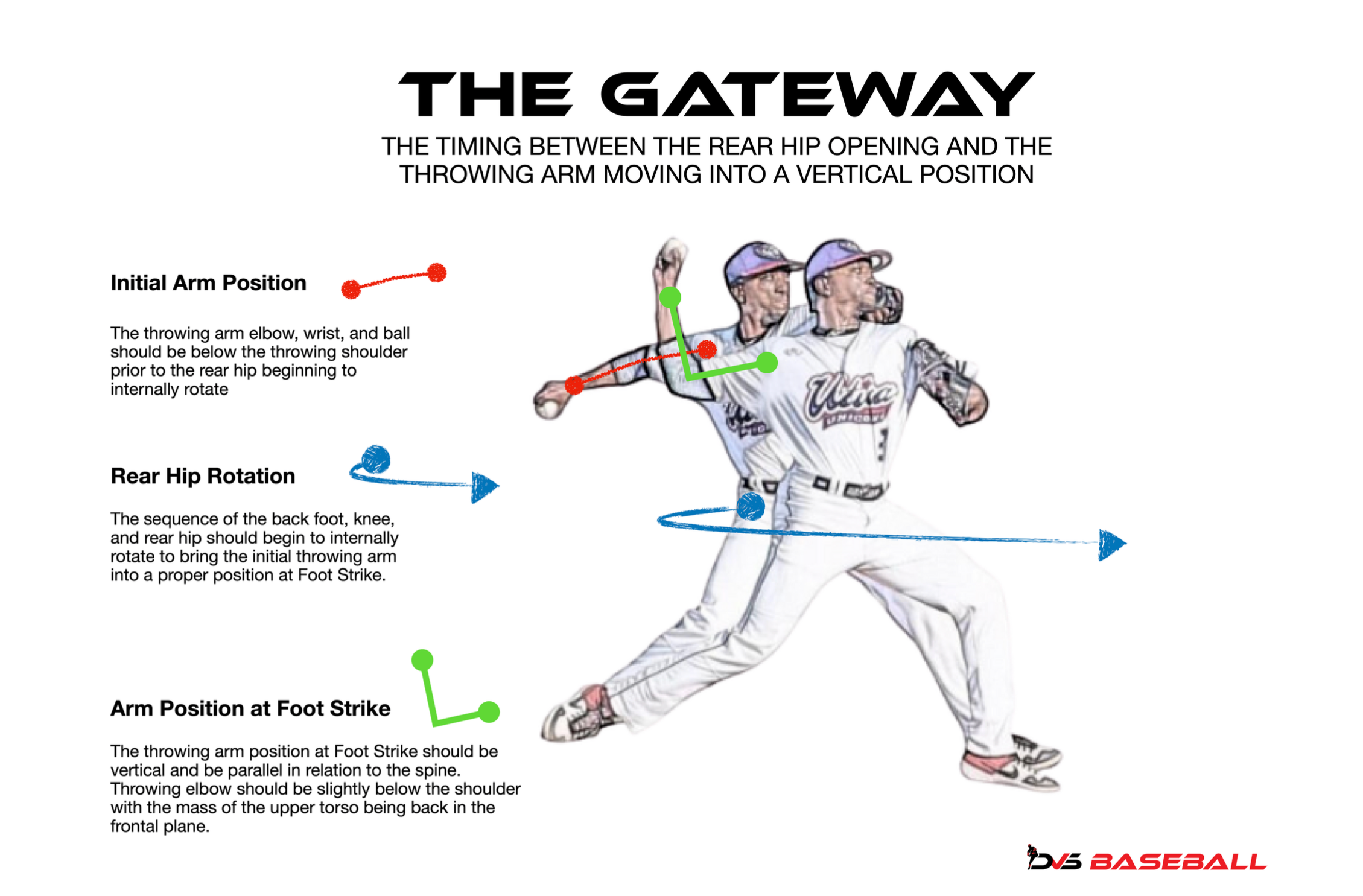
Sketch depicting how the timing of the gateway works.
When this movement occurs at the right moment, the pelvis and throwing arm can rotate into a stronger position before foot strike, allowing the body to transfer energy more efficiently through the throw.
Greene already does many things well in his delivery.
He kicks his front leg out aggressively while his rear foot angles properly, driving force toward the target. His torso shifts toward his back hip, setting the stage for what could be strong sequencing throughout the delivery.
But after his front leg extends, Greene’s torso remains hunched forward for too long.
This delay allows the throwing elbow to retract farther behind the body, increasing stress on the shoulder capsule. At the same time, the front leg can overextend, slowing hip rotation and disrupting the overall sequence.
The result is a delivery where the arm is asked to do more work than the body.
The Example at Shortstop
Elly De La Cruz provides a natural example of how this movement should occur.
When De La Cruz fields the ball and fires across the diamond, his thoracic spine instinctively extends earlier in the motion. That extension converts the drive from his back leg and the rotation of his front leg into momentum for pelvic rotation.
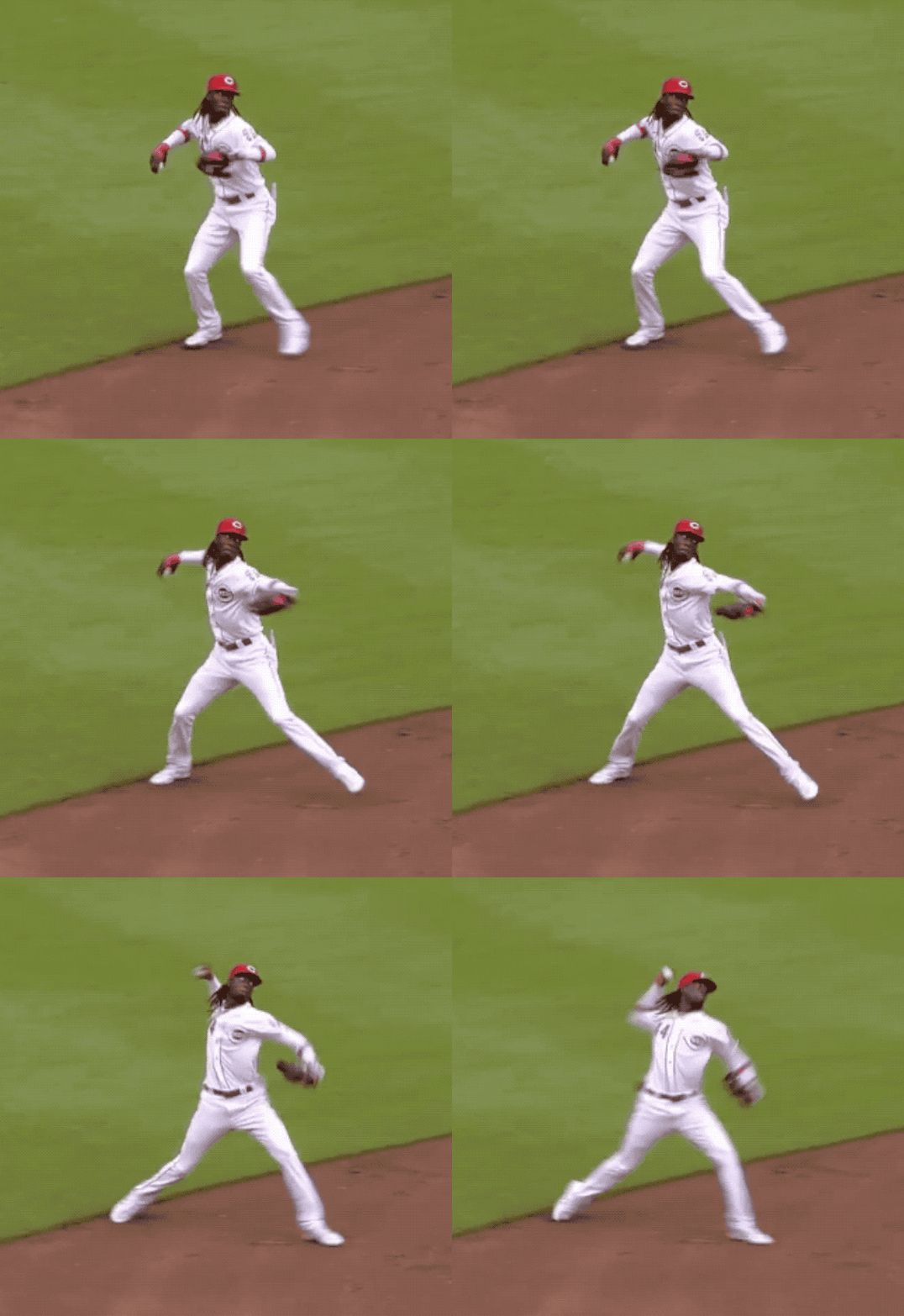
De La Cruz is moving across the diamond, showcasing his movement from the Gateway to Foot Strike.
The result is a fluid transfer of energy that places the throwing arm in a leveraged position just before foot strike.
For pitchers like Greene, learning to incorporate this earlier thoracic extension can dramatically improve sequencing while reducing unnecessary stress on the shoulder and elbow.
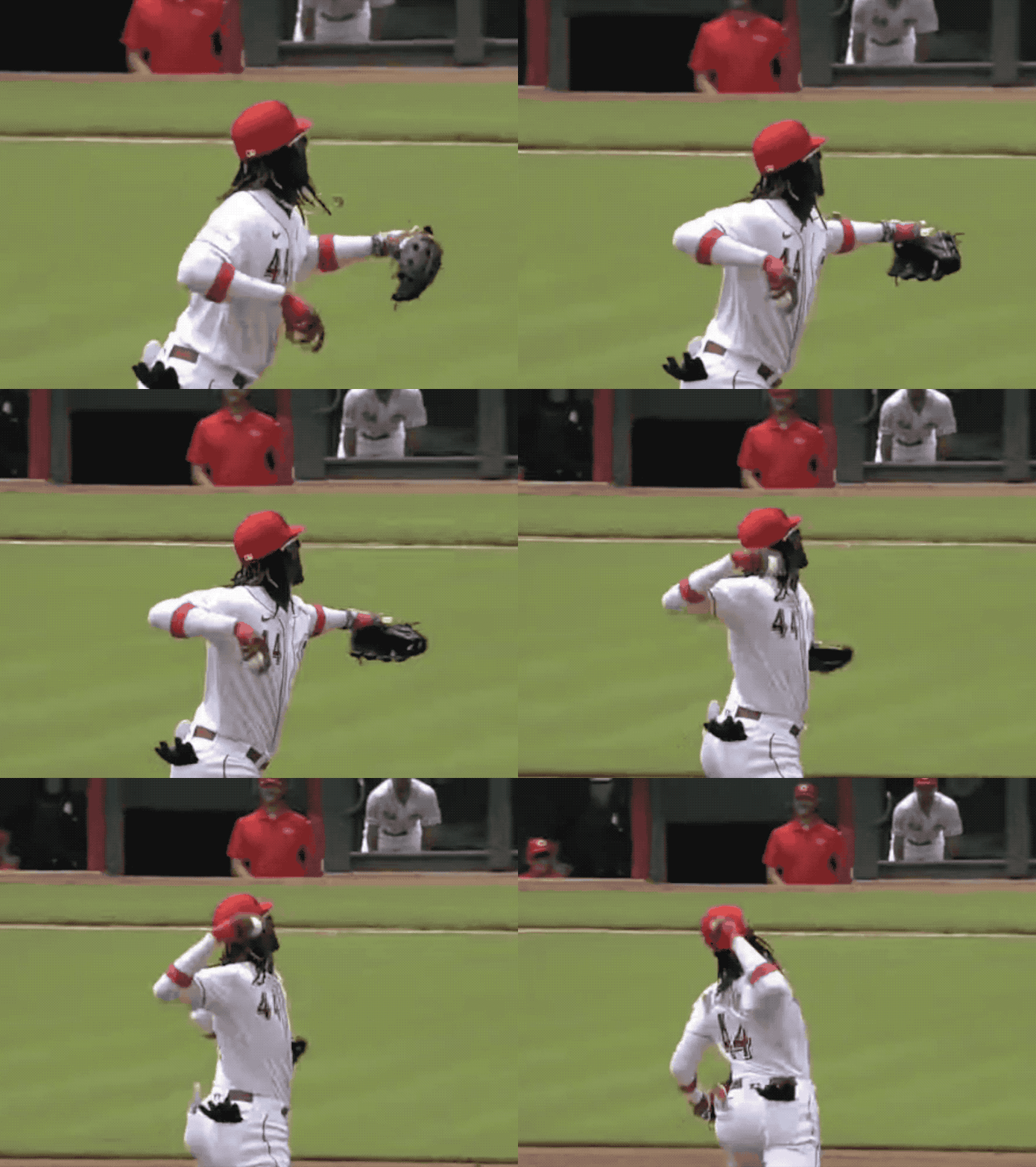
Back View of De La Cruz moving from the Gateway to Foot Strike.
Many high-velocity pitchers in today’s game miss this window to utilize the body’s natural trunk rebound.
When that rebound is delayed, efficiency drops—and the arm is forced to absorb more of the workload.
Velocity vs. Sequencing
As of February 28th, in Greene’s first Spring Training inning, he was already throwing 100 mph. The adjustment had yet to be made.
Many will argue that mechanics are not the issue. But after scoring and studying more than 4,000 MLB pitchers, I’ve seen this pattern many times before. Higher velocities without the necessary sequencing, which helps the foundation of the body to support the arm, will ultimately expedite the throwing arm’s timeline to injury.
The frustrating part of situations like this is that the adjustment is subtle. It doesn’t require reinventing a delivery. It requires improving the timing between the trunk, pelvis, and throwing arm before foot strike.
But when that timing changes, everything else changes with it:
Energy transfers more efficiently through the body
The throwing arm works with leverage instead of against it
Stress on the shoulder and elbow decreases
Most importantly, the pitcher gains a chance to sustain high-level performance over a longer career.
Hunter Greene remains one of the most talented pitchers in the game.
But for him—and for many high-velocity pitchers—the difference between short bursts of brilliance and a decade-long career often comes down to a single window in the delivery.
The sequencing before foot strike.