When the Game Begins to Serve the Information
Because something can be measured does not mean it should become the measure of everything. Baseball’s danger did not begin when it acquired better information. It began when information ceased to serve the game—and the game began to serve the information.
We now have more than a decade of evidence showing how the rise of pitch metrics, data-driven technology, and modern training methods has transformed baseball. These advancements have changed how pitchers are evaluated, developed, recruited, trained, and ultimately used at every level of the game.
Many of these tools have created meaningful progress. We can now measure velocity, spin, movement, workload, mechanics, and physical performance with a level of detail previous generations could never have imagined. We understand more about the flight of a pitch, the movement patterns of the body, and the physical demands of throwing than at any other point in baseball history.
But because something can be measured does not mean it should become the measure of everything.
The danger did not begin when baseball acquired better information. It began when information ceased to serve the game and the game began to serve the information.
A New Definition of Pitching Success
For more than a century, successful pitchers were judged by the whole of their work. They were expected to command the baseball, change speeds, disrupt timing, make adjustments, navigate a lineup, compete without their best stuff, handle a meaningful workload, remain available, and consistently get outs.
Velocity and movement always mattered. Great pitchers have always possessed exceptional physical abilities. But those abilities existed within a much broader definition of pitching success.
In little more than a decade, that definition has seemingly been rewritten. Velocity, spin, movement, pitch shape, and swing-and-miss have become the primary currencies of opportunity. Pitchability, command, adaptability, durability, workload capacity, and the ability to navigate a lineup have too often become secondary considerations.
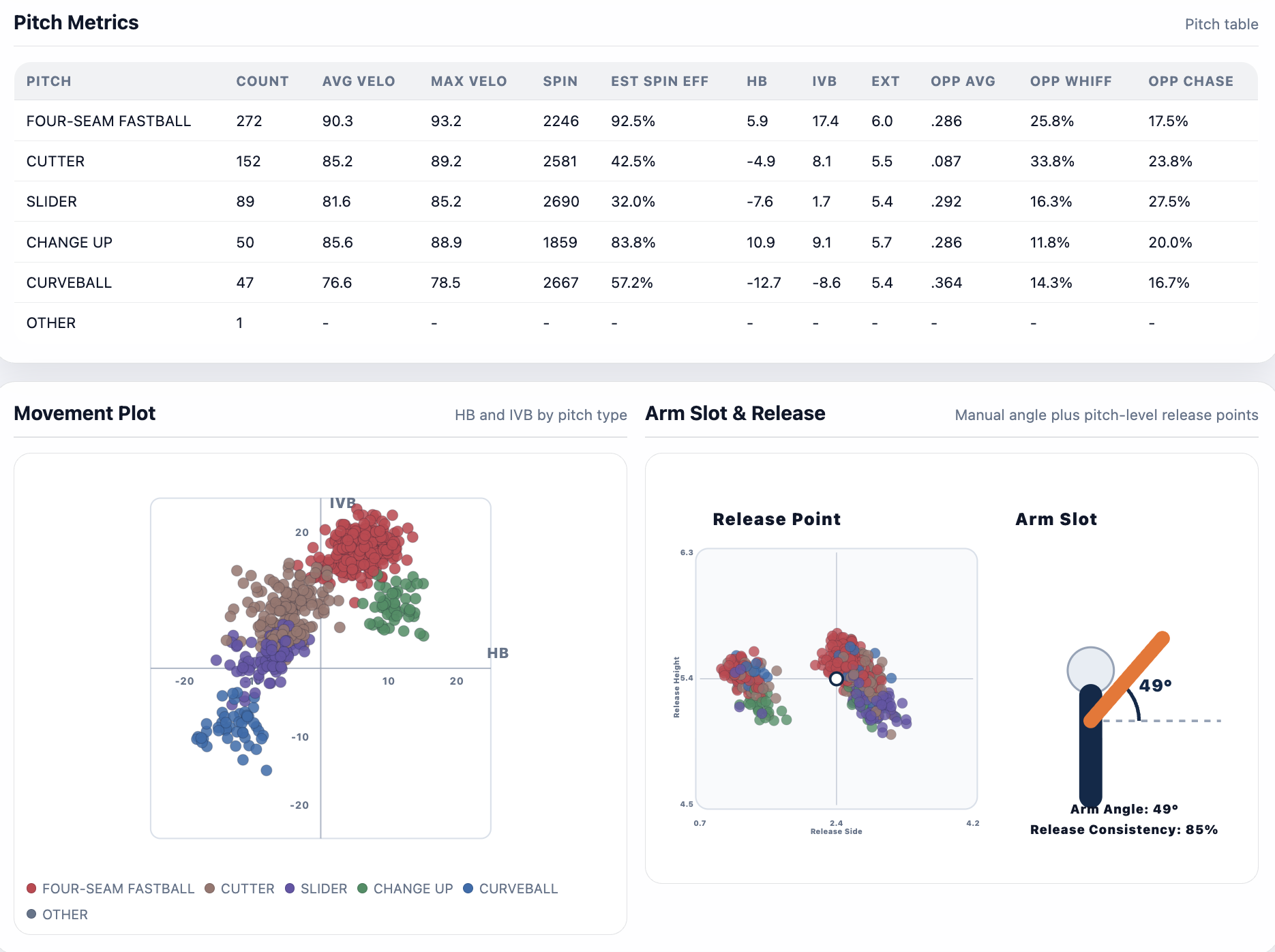
Sample report of a professional pitchers pitch metrics over the course of a season
These measurable traits are not bad. The error lies in mistaking the part for the whole.
A pitcher needs quality pitches, but an impressive collection of pitches does not automatically create a complete pitcher. When the pitch becomes more important than the pitcher, we should not be surprised when the pitcher eventually breaks.
A Generation Trained for a Different Game
The behavior and mindset of today’s pitchers did not change by accident. Pitchers are adapting to the version of the game being placed in front of them.
They pursue velocity because velocity creates attention. They pursue movement because movement attracts recruiters and scouts. They pursue swing-and-miss because strikeouts and whiff rates are rewarded. They chase the measurable characteristics most closely associated with scholarships, draft status, professional contracts, roster spots, and the next opportunity.
Young pitchers are not wrong for responding to those incentives. Parents are not wrong for trying to help their children advance. Trainers are not wrong for attempting to prepare players for what colleges, scouts, and professional organizations appear to value.
The deeper problem is that a series of individually reasonable decisions can still produce a deeply unreasonable result.
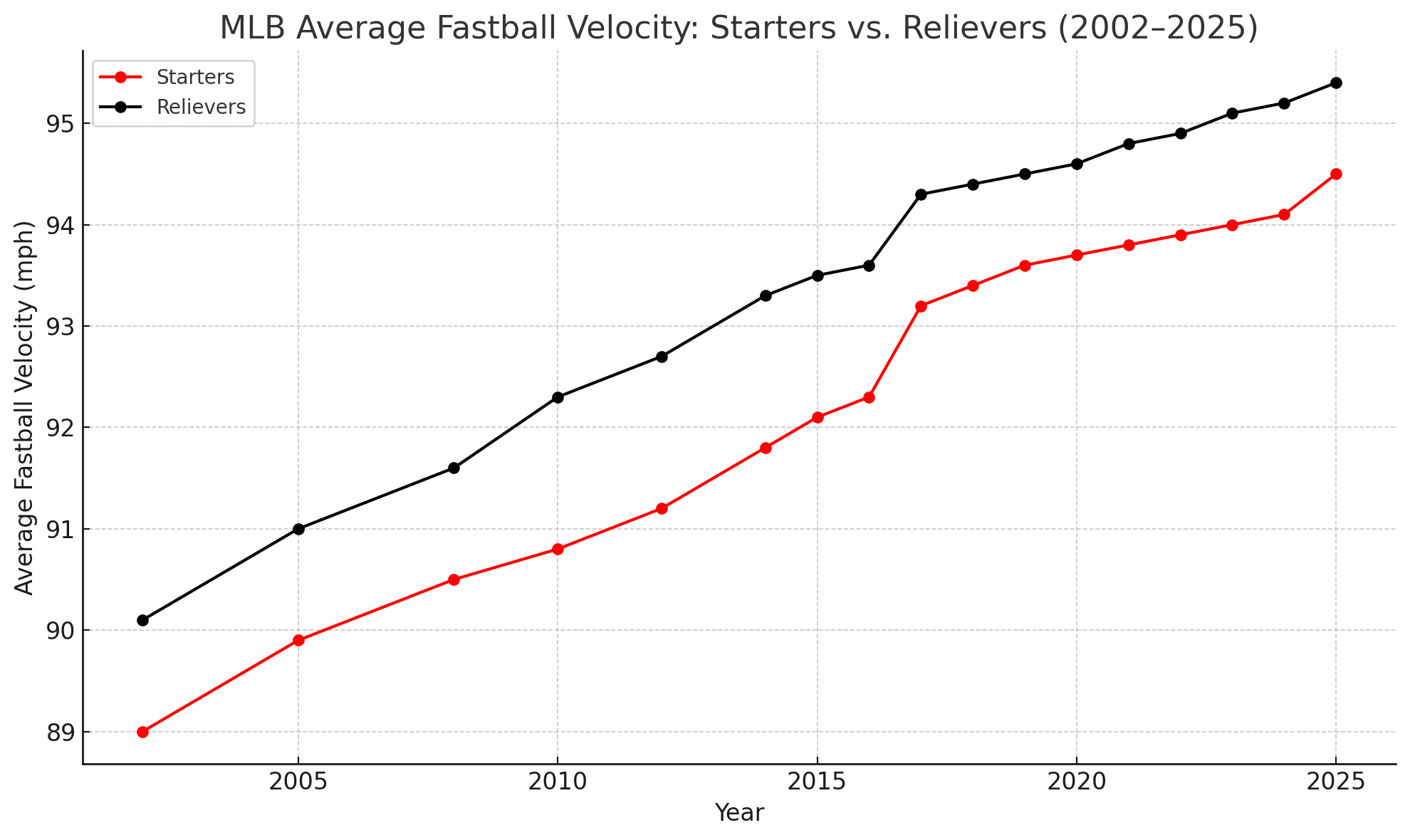
The trainer prepares the player for what scouts reward. The scout identifies what organizations value. The organization acquires the type of pitcher the modern game demands. Travel baseball programs and private facilities develop business models around the traits most likely to generate attention and create the next opportunity. Families follow the opportunities placed in front of them, and young pitchers follow the system.
No single person needs to intend the final result for the cycle to continue.
When the Marketplace Follows the Metrics
The private player-development industry did not create this cycle by itself. The marketplace naturally responds to what the game rewards.
When colleges, scouts, professional organizations, and social media reward velocity, spin, movement, and swing-and-miss above nearly everything else, the development industry will organize itself around producing more of those traits. When command, pitchability, adaptability, durability, efficiency, and workload capacity are not rewarded with the same enthusiasm, they will gradually receive less attention.
The private sector has built a highly profitable industry around the metrics most closely associated with advancement. That does not mean every private facility or trainer is acting irresponsibly. Many coaches and organizations are doing thoughtful, meaningful, and necessary work.
But every business eventually responds to the incentives placed in front of it.
Parents understandably search for the program that promises the clearest path to an opportunity. Players understandably want the training that will make them more recruitable. Facilities understandably market the results most likely to attract attention.
The cycle will continue as long as decision-makers at the highest levels of the game reward the same values and outcomes that helped create it.
The Cost Paid by the Pitcher
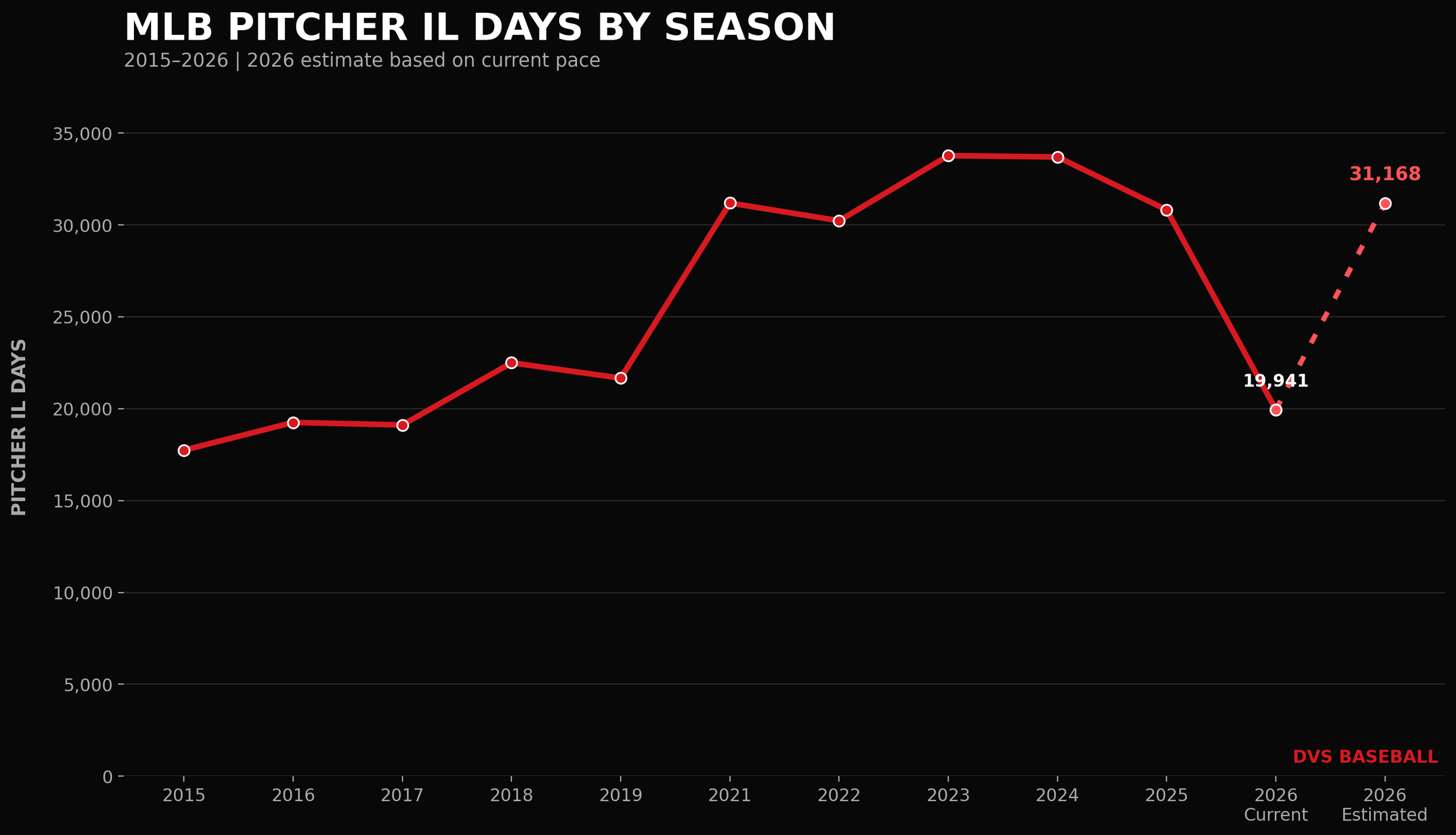
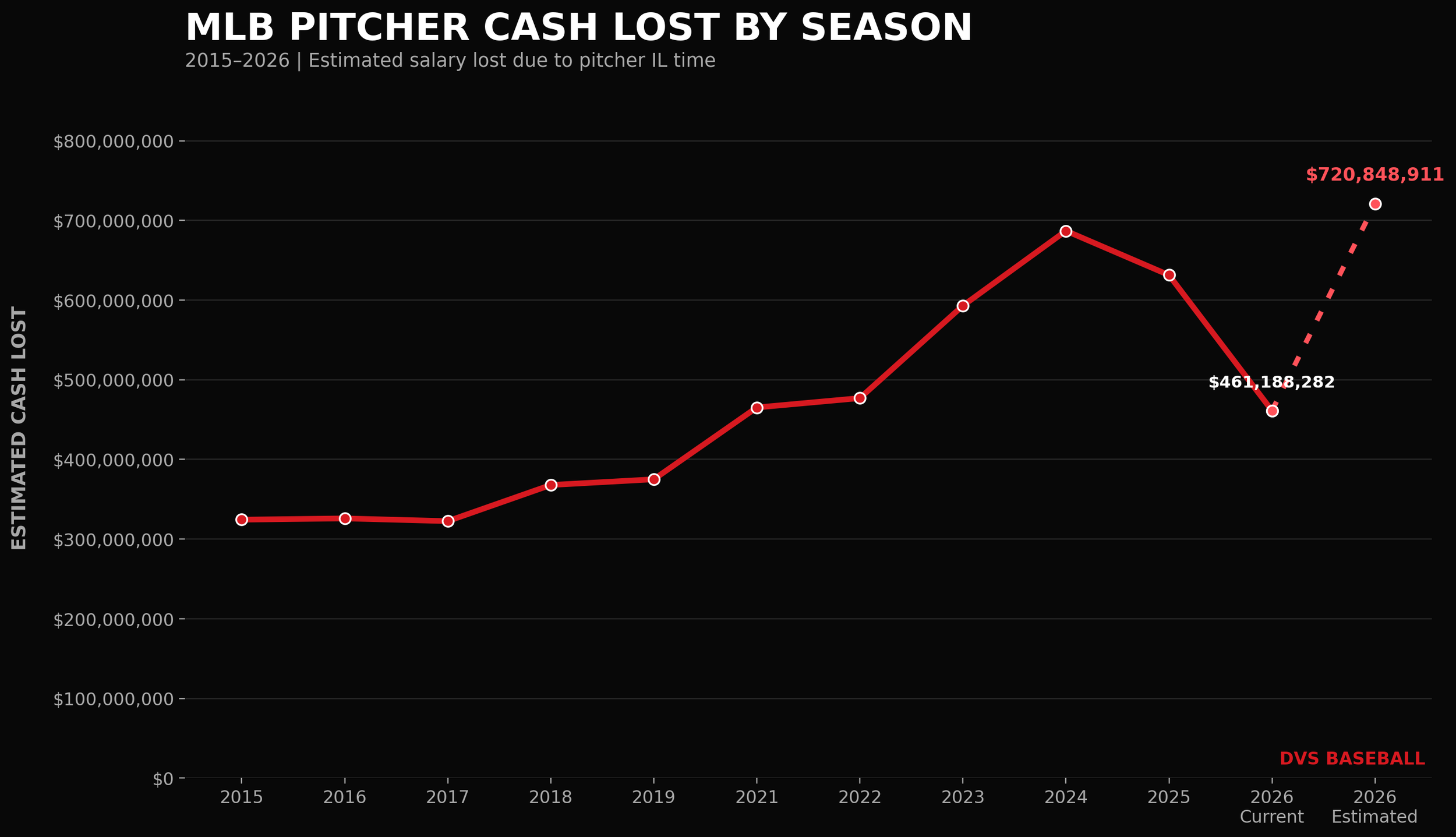
Across every level of baseball, pitchers are chasing measurable traits that represent only part of what successful pitching requires. Professional organizations continue to lose significant salary dollars and thousands of player-days to injured pitchers who can no longer withstand the demands of a full season.
But the financial cost is not the most important cost. The pitcher pays the greater price.
I feel for the pitchers who have grown up inside this era. I feel for those who have been left with one surgery—or two or three—in pursuit of an opportunity they were told would be waiting if they could simply throw harder, create more movement, or produce a more impressive pitch profile.
Many of them did exactly what the system asked. They trained for the metrics that generated attention. They competed year-round. They chased the next showcase, tournament, scholarship, draft opportunity, roster spot, or contract. They accepted the physical risks because the opportunity placed in front of them seemed worth pursuing.
Some earned that opportunity. Others were left with a damaged arm, a shorter career, and the difficult realization that the system had prepared them to attract attention more effectively than it had prepared them to sustain success.
An opportunity has limited value if the pitcher’s body cannot survive long enough to realize it.
The Qualities We Quietly Devalued
For most of baseball history, successful pitching required more than raw output. It required command, adaptability, efficiency, durability, competitiveness, workload capacity, the ability to change speeds, the ability to read swings, the ability to make adjustments, and the ability to navigate a lineup more than once.
It also required the ability to compete without your best fastball, consistently get outs, and remain healthy enough to take the ball again.
These traits are more difficult to capture in a single bullpen session or social media clip. They do not always produce an immediate spike on a dashboard, and they may take months or years to develop. But their value has not disappeared simply because they are harder to measure.
The game may have changed what it rewards, but it has not changed what a pitcher ultimately must do. A pitcher must still get hitters out, manage the game, respond to adversity, make adjustments, and remain available.
The most advanced pitch in the world has little value when the pitcher is unavailable to throw it.
More Than the Natural Evolution of the Game
Everything in player development requires balance. Data, technology, and training innovation are not the enemy. They have helped baseball understand performance in extraordinary ways.
But the evidence suggests that what we have witnessed is not merely the gradual evolution or improvement of the game. It represents a systematic change to the fabric of pitching and to our definition of what a successful pitcher is supposed to be.
The game has not simply added new information to its traditional understanding of pitching. In too many cases, the new information has replaced it.
That distinction matters.
Data should add context to judgment, not eliminate the need for it. Technology should improve our ability to develop pitchers, not narrow our definition of what a pitcher is. Training should develop the complete athlete, not merely enhance the measurable characteristics of an individual pitch.
The more precisely we can measure the pieces, the more careful we must become not to lose sight of the whole.
Information Cannot Replace Wisdom
Information is not the same as wisdom. Information tells us what happened. Wisdom helps us determine what it means, how much it matters, and what should be done next.
A radar gun can tell us how hard a pitcher throws, but it cannot tell us whether that pitcher is physically prepared to sustain the velocity. Pitch-tracking technology can describe movement, but it cannot determine whether the pitcher has the command, adaptability, or health necessary to use that movement effectively over a season.
A biomechanical analysis can identify patterns and relationships, but it still requires thoughtful interpretation, individual context, and an understanding of the person behind the movement.
The purpose of information should be to help us make better decisions. But when the information becomes the purpose, the player can disappear behind the numbers.
The dashboard becomes more important than the development process. The individual pitch becomes more important than the complete pitcher. The next opportunity becomes more important than the pitcher’s ability to survive it.
That is the imbalance we must correct.
A Better Version of Innovation
We should not abandon innovation. We should demand a better version of it.
We need a development model that improves performance without sacrificing durability and values pitchability alongside measurable pitch characteristics. We need to help pitchers understand not only how to generate more output, but how their bodies must organize, sequence, recover, and adapt to support that output.
We need to develop command with the same intentionality that we develop velocity. We need to prepare pitchers to compete, adjust, recover, manage workloads, and navigate lineups. We need to evaluate whether a pitcher can perform repeatedly, not merely whether he can produce an impressive pitch in a controlled environment.
Most importantly, we must prepare pitchers not only to earn an opportunity, but to survive and succeed once they receive it.
More Voices Must Speak
Correcting the imbalance will require more people throughout baseball to speak honestly about what they are seeing. Coaches, trainers, medical professionals, scouts, executives, former players, and parents all have a role to play.
The goal should not be to become negative, cruel, or argumentative. The goal should be progress.
We do not need to reject every modern idea or criticize every person working within the current system. Most people are attempting to help players and respond to the incentives placed in front of them.
But we should be willing to question those incentives. We should be willing to ask whether better information has always produced better decisions. We should be willing to ask whether the modern development model is creating better pitchers—or merely more measurable pitches.
We can appreciate everything technology has given baseball while still questioning how it is being applied. We can pursue performance without sacrificing durability. We can celebrate innovation while protecting the person responsible for producing the result.
We can use better information without allowing information to become our master.
The tools must serve the pitcher.
The pitcher must not be sacrificed to the tools.
Here’s to finding a better balance—and to more people having the courage to help the next generation understand what successful pitching was always meant to be.