
Delivery Value System.
The foundational biomechanical model behind DVS Baseball.
Why do some pitchers get hurt faster than others?
The question that inspired our research, the creation of the Delivery Value System and the formation of DVS Baseball.
Mechanical components
Mechanical sub-components
DVS Score range
The question that started it all.
Why do some pitchers get hurt faster than others?
This fundamental question inspired the creation of the Delivery Value System, a biomechanical model developed to objectively evaluate the movement patterns and sequence of the pitching delivery.
Through the study of past and present professional pitchers, we sought to determine whether the mechanical characteristics of a pitcher's delivery could help explain differences in the risk and timing of throwing-arm injuries.
The initial research supported the validity of incorporating delivery mechanics into a statistical model for assessing injury risk in professional baseball pitchers.
This research provided the scientific foundation for the formation of DVS Baseball in 2014 and was subsequently published in the peer-reviewed medical journal Orthopedics.
From a question to a scientific foundation.
The original study demonstrated that incorporating an objective evaluation of delivery mechanics significantly improved the statistical assessment of injury risk in professional pitchers.
Professional pitchers studied
Lower modeled injury risk associated with each additional delivery score point
Peer-reviewed publication online
The reported association does not establish that changing an individual pitcher's mechanics will produce the same reduction in injury risk.
Read the original medical publication ↗
Six components.
One connected delivery.
The Delivery Value System evaluates the pitching delivery through six primary mechanical components and more than 30 sub-components.
The model uses defined mechanical criteria to evaluate the movement of a pitcher throughout the delivery sequence, rather than relying solely on subjective observations of appearance or style.
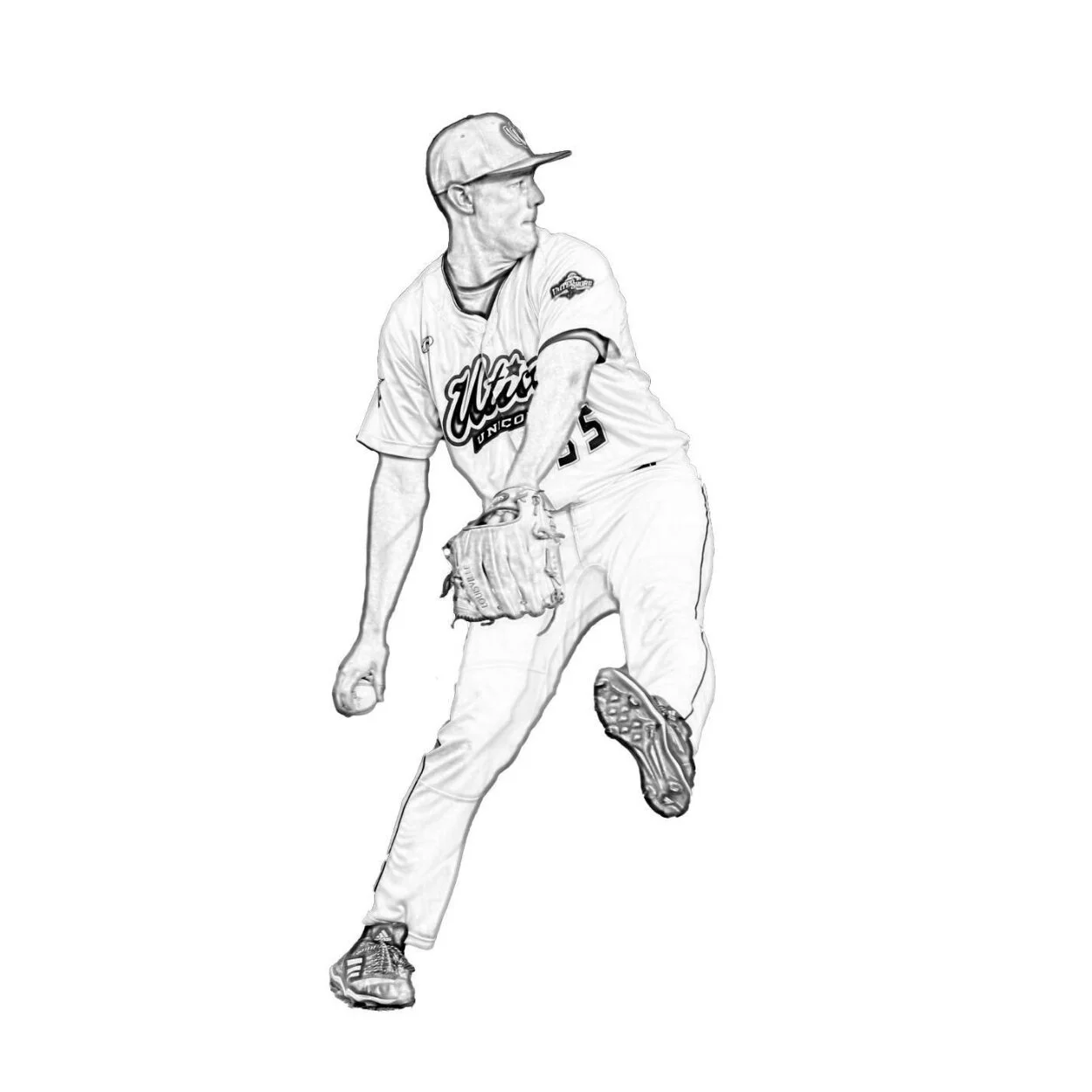
Mass & Momentum
The positioning of the lower body as the front foot passes the lead hip while the pitcher moves down the mound.
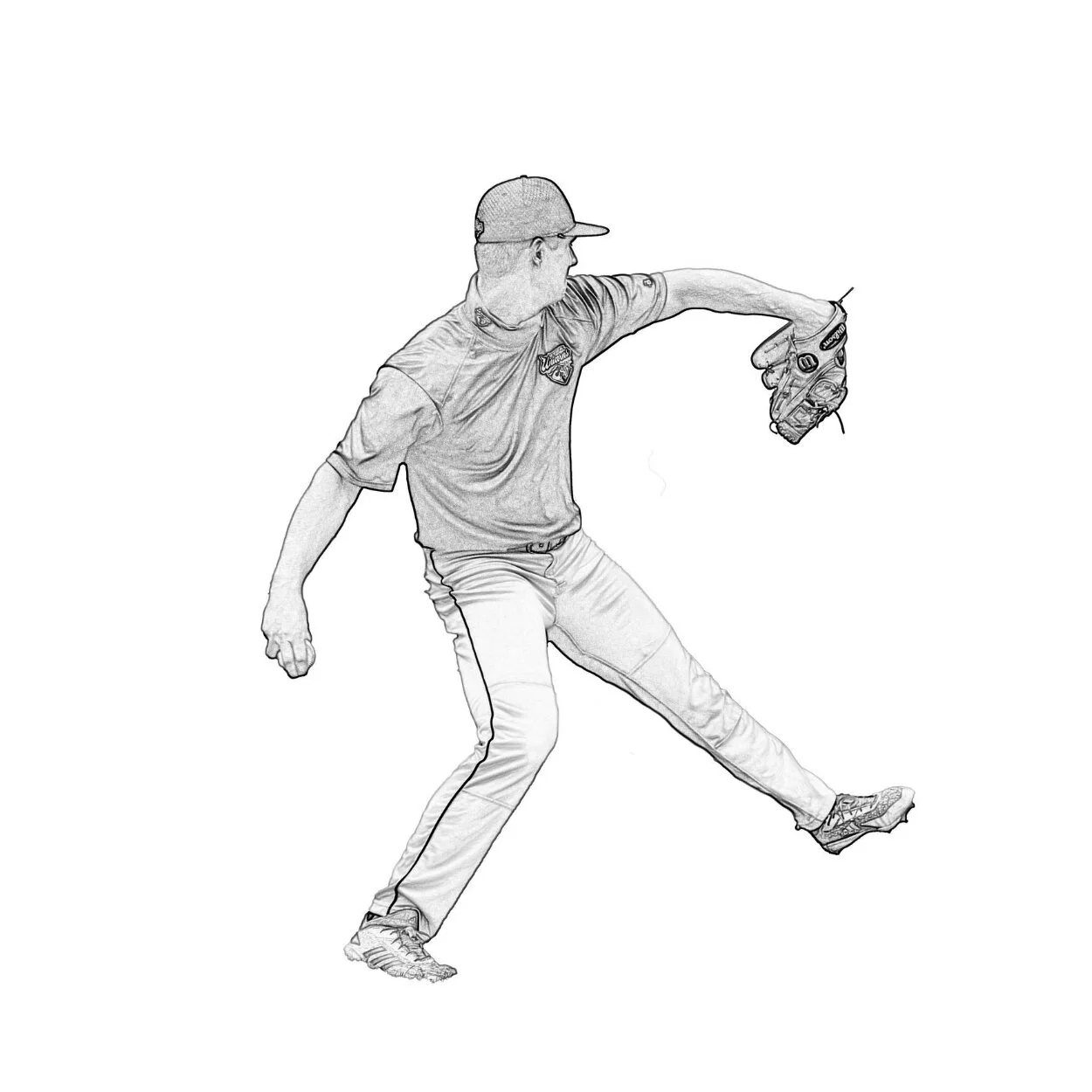
Arm Swing
The path of the throwing arm from glove separation until the throwing hand extends above the throwing elbow.

Posture
The positioning of the head and trunk as the body moves toward the target, before the front foot contacts the ground.
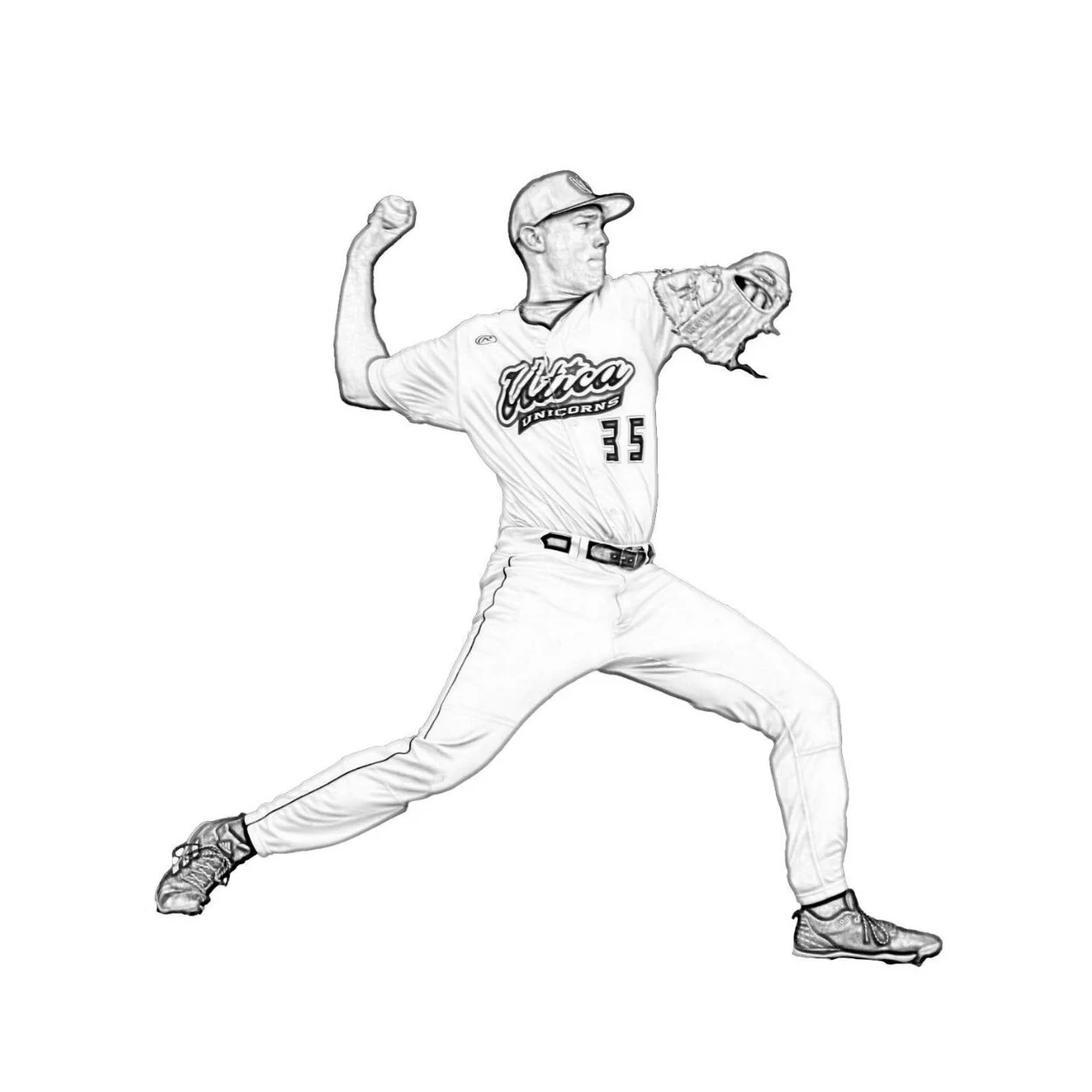
Position at Foot Strike
The positioning of the upper and lower extremities as the front foot makes firm contact with the ground.
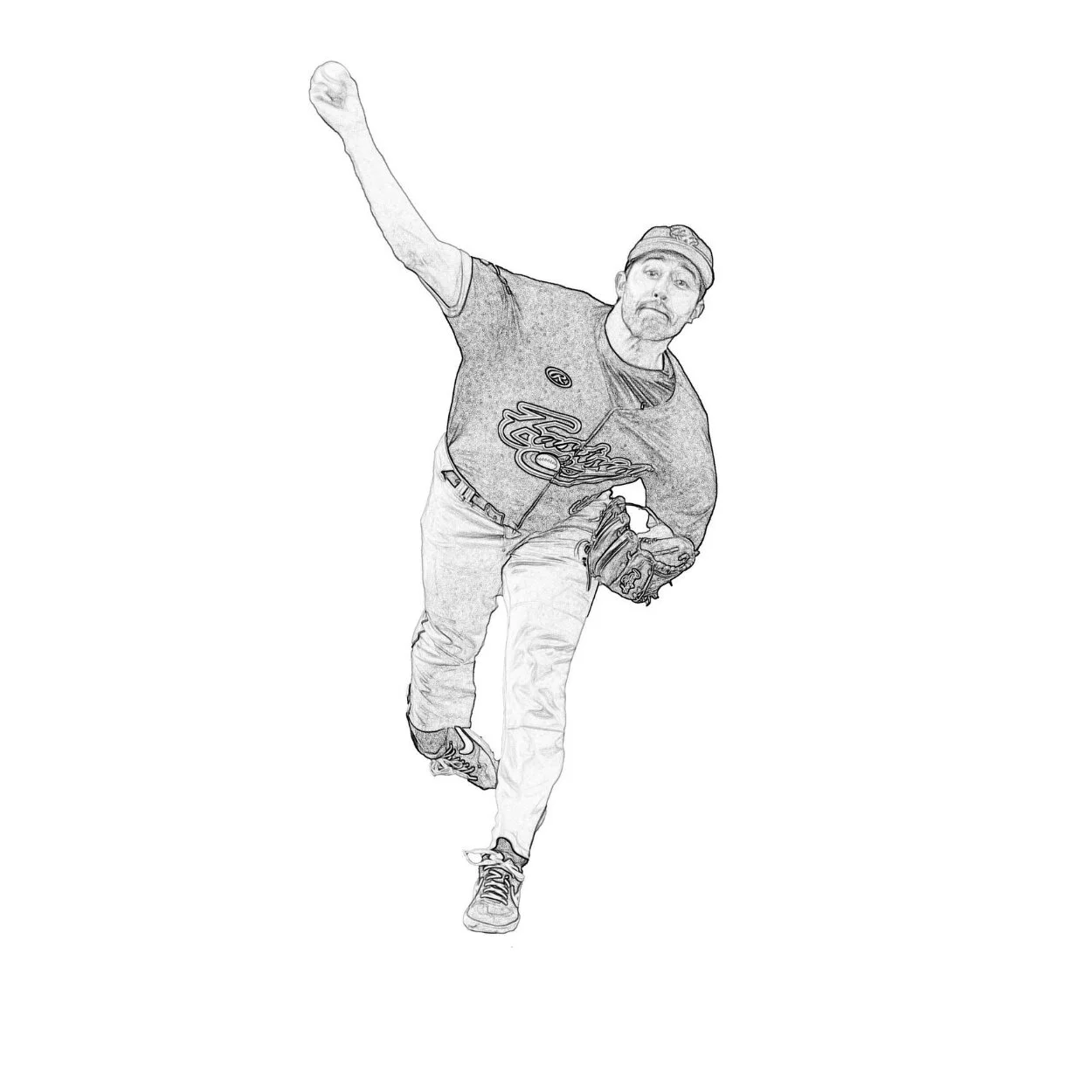
Path of Arm Acceleration
The path of the ball between maximal external rotation of the throwing shoulder and ball release.

Finish
The transition of the pitcher's body following ball release into a balanced follow-through position.
The value is in the sequence.
Each component provides information about a particular movement or phase. Understanding how those components relate to one another allows us to examine the delivery as a connected sequence rather than a collection of isolated positions.
Understanding the DVS Score.
The DVS Score is the numerical representation of the mechanical evaluation produced through the Delivery Value System.
The six component scores are combined to produce an overall score ranging from 0 to 24, providing a consistent framework for evaluating delivery mechanics.
The overall score provides a reference point. The individual component scores provide greater insight into the characteristics of a pitcher's delivery.
Two pitchers can have identical overall scores while possessing different movement characteristics and developmental priorities.
DVS SCORE
How is a DVS Score determined?
Reliable scoring requires appropriately positioned rear and side video perspectives, sufficient image quality and multiple representative high-intensity pitches.
The movements are evaluated against the defined criteria of the Delivery Value System. A DVS Score is included in the Initial Pitching Assessment when the submitted video supports reliable scoring.
How is the score used in development?
The mechanical evaluation helps identify movement characteristics and developmental priorities. Subsequent evaluations can provide a reference for measuring changes in the delivery over time.
Does a DVS Score predict an injury?
The original research supported the use of delivery mechanics within a broader statistical injury-risk model. A DVS Score alone does not provide a medical diagnosis, an individual injury probability or a guarantee of future health.
Learn more about the Injury Risk Model ↗The importance of sequencing.
Understanding what a pitcher produces is different from understanding how a pitcher produces it.
Pitch location, ball movement and velocity are measurable outputs of a pitch. The movements of the pitcher are among the inputs that help produce those outputs.
The Delivery Value System provides a framework for examining the relationship between those movements throughout the pitching delivery.
Our objective is not to make every pitcher look the same. It is to help each pitcher better utilize their individual physical abilities.
Influence the outputs.
One foundation. Evolving capabilities.
Years of research and technological development have expanded our ability to evaluate the pitcher. The foundational biomechanical model remains the starting point.
Delivery Value System
The biomechanical framework for evaluating the movement and sequence of the pitching delivery.
DVS Score
The numerical representation of the mechanical evaluation produced through the Delivery Value System.
DVS X-Ray
Our proprietary technology supporting biomechanical measurement, analysis and continued research.
Technology supports the model. It does not define it.
The purpose of our measurement tools is to improve our understanding of the pitcher and the movement producing the pitch.
A scientific foundation.
A practical purpose.
Through the Initial Pitching Assessment and our Development System, we bring the Delivery Value System directly to pitchers.
Understand the delivery. Identify the individual developmental priorities. Build toward the capacity to produce, repeat and sustain performance.